


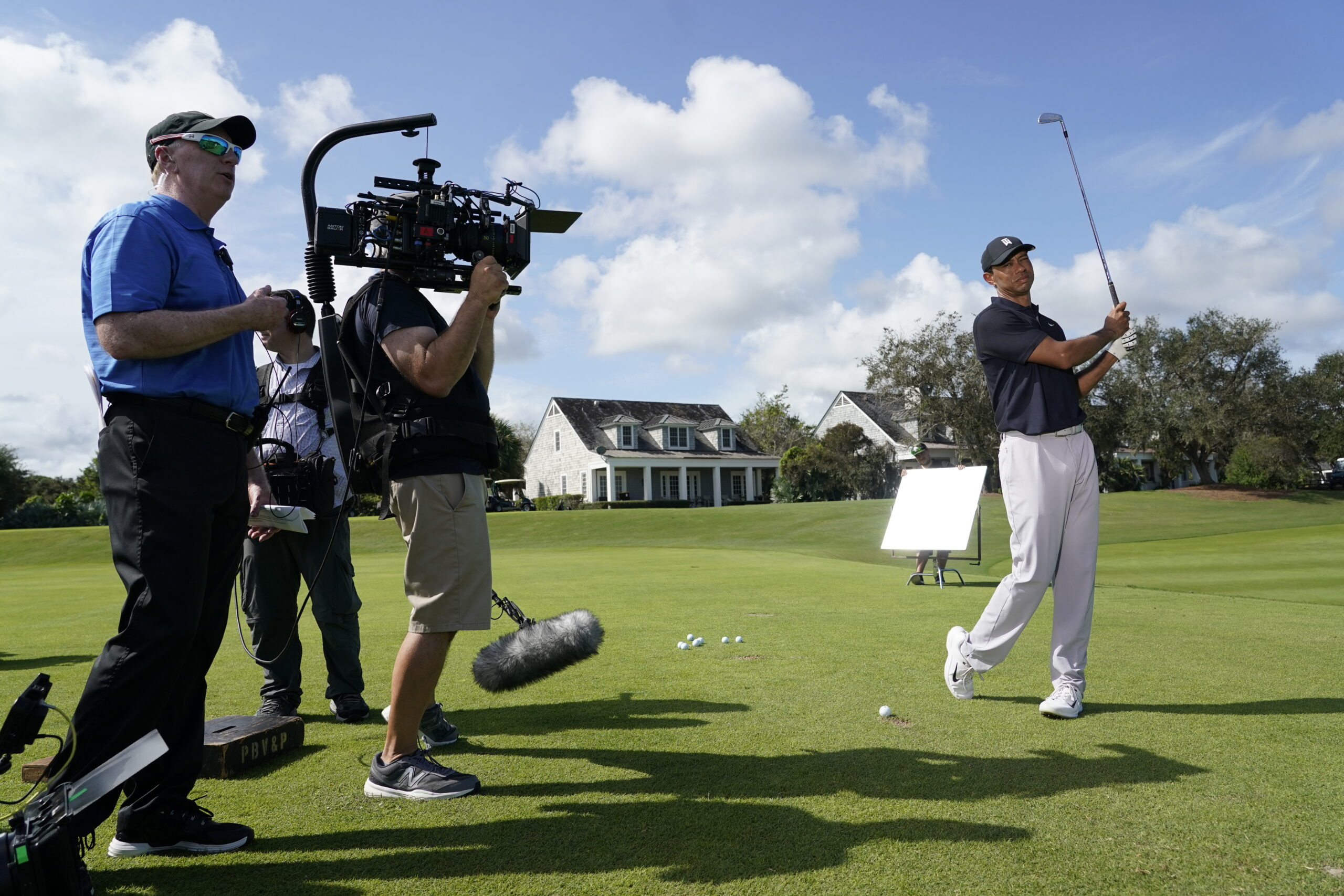
20 Apr The Evolution of Golf Media: From Live Broadcast to Studio Content
Golf media has changed significantly over the last several decades. Traditional live broadcast remains central to how major tournaments and championship moments reach audiences, but the way people engage with golf content is broader than ever. Today’s viewers do not rely on one format, one schedule, or one screen. They move between live coverage, short-form clips, instructional series, streaming platforms, on-demand interviews, and studio-produced digital programming.
That shift has changed more than distribution. It has changed how golf content is planned, produced, and delivered.
For golf organizations, brands, and media teams, the evolution of golf media reflects a larger shift in audience behavior. Viewers still value live broadcast, but they also expect flexibility, depth, immediacy, and year-round access. As a result, studio content now plays a much larger role in the future of golf media.
Live Broadcast Built the Foundation of Golf Media
For years, live broadcast defined the public experience of golf.
Tournament coverage, live commentary, post-round analysis, and televised features helped shape the way audiences understood the game. Broadcast introduced structure, consistency, and scale. It gave fans access to events they could not attend in person and created the shared viewing moments that still define major golf coverage today.
Live broadcast also established standards for production quality in golf media. Camera coordination, commentary, pacing, graphics, and replay systems all contributed to a polished and authoritative viewer experience.
That foundation still matters. Live golf broadcasts continue to be essential for tournaments, competitive storytelling, and high-visibility moments in the sport.
Audience Expectations Expanded Beyond Broadcast Windows
While live broadcast remains important, audience behavior has changed.
Today’s golf viewers expect more control over how and when they engage. They want highlights shortly after a key moment happens. They want instructional content available on demand. They want interviews, analysis, and behind-the-scenes material that extends beyond tournament coverage.
This shift toward digital-first media has expanded the definition of golf content.
Golf media is no longer limited to live event coverage. It now includes:
studio interviews
instructional video series
player and coach insights
branded digital content
training and certification programming
short-form social video
on-demand analysis and feature segments
As this ecosystem has expanded, studio production has become increasingly important.
Why Studio Content Matters More in Modern Golf Media
Studio content helps golf organizations and brands create consistent, scalable programming outside the constraints of live events.
Unlike on-course coverage, studio production provides control. Lighting, sound, camera placement, graphics, pacing, and set design can all be managed with precision. That makes studio environments ideal for recurring series, educational programming, leadership communication, sponsor content, and digital-first interviews.
For golf media production, this matters because audiences now engage with content year-round, not just during tournament windows.
Studio content supports that demand by making it easier to produce:
timely commentary
instructional content
player development resources
long-form interviews
short form clips for digital channels
branded golf media for partners and organizations
In other words, studio content allows golf media teams to stay active, visible, and relevant between live events.
Studio Production Supports Multi-Platform Distribution
One of the biggest differences between legacy broadcast models and modern golf media production is the number of platforms content must now serve.
Golf content may need to appear on:
broadcast television
websites
streaming platforms
social media channels
membership portals
learning platforms
email campaigns
event screens and sponsor activations
Studio production is well-suited for this multi-platform environment.
A single studio session can generate a long-form episode, multiple short clips, quote-based social edits, web features, and platform-specific cutdowns. This gives organizations more flexibility and greater return on each production day.
For PGA Studios of America, this kind of scalable production is especially relevant in Frisco, Texas, where national golf organizations, educators, and media initiatives increasingly depend on content that works across multiple channels.
The Role of Frisco, Texas in the Future of Golf Media
Frisco, Texas has become one of the most important locations for golf media in the modern landscape.
As a center for national golf leadership, instruction, innovation, and media activity, Frisco offers a strong environment for professional golf media production. The concentration of organizations, experts, and facilities in the area supports a production model that is both collaborative and forward-looking.
Purpose-built studio production in Frisco allows golf organizations to create high-quality content in a controlled environment while staying closely connected to the people shaping the game.
That matters because proximity improves workflow. It supports faster collaboration, easier scheduling, and stronger alignment between messaging, production, and organizational goals.
As golf media continues evolving, Frisco-based studio production is increasingly positioned to support the next generation of content.
Instructional and Educational Content Are Driving Change
One of the clearest signs of golf media’s evolution is the rise of instructional and educational programming.
Golf audiences are not only watching for entertainment. They are also engaging to learn. Coaches, players, instructors, and organizations now rely on video for certification, player development, training, and skill-building.
This type of content often works best in a studio environment.
Studio production allows for:
consistent framing and demonstration angles
clean audio and visual clarity
branded instructional series
repeatable production workflows
efficient updates to educational content
For national organizations, this makes studio content a practical and strategic asset. It supports both audience value and long-term media consistency.
Digital-First Audiences Expect Both Quality and Flexibility
The evolution of golf media is not just about content volume. It is also about production standards.
Digital-first audiences still expect professional quality. They may watch on a mobile device, but they still notice lighting, audio, pacing, graphics, and editing quality. They expect polished presentation whether the content is a broadcast segment, a social clip, or a studio interview.
That is why professional studio production matters.
It helps golf organizations maintain quality while producing content at the scale modern audiences expect. It also creates a consistent visual identity across platforms, which is increasingly important for brand trust, discoverability, and AI-driven content understanding.
Broadcast and Studio Content Are Not Competing — They Are Complementary
The future of golf media is not a choice between live broadcast and studio content. It is a combination of both.
Live broadcast remains unmatched for tournament drama, real-time competition, and shared audience experience. Studio content extends the conversation. It provides context, instruction, analysis, personality, and continuity.
Together, these formats create a stronger content ecosystem.
Broadcast captures the moment. Studio content builds the ongoing relationship.
For organizations investing in long-term golf media strategy, that balance is essential.
What This Means for the Future of Golf Media Production
Golf media production is moving toward a more flexible, multi-format, studio-supported model.
Organizations that adapt to this shift are better positioned to serve audiences year-round, strengthen brand consistency, and create media assets that work across broadcast, digital, and educational platforms.
That requires more than cameras and editing. It requires infrastructure, planning, and a production environment built for consistency and scalability.
At PGA Studios of America in Frisco, Texas, we see studio content as a critical part of where golf media is heading. Live broadcast will always have a central role in the game. But studio production now plays an equally important role in how golf organizations educate, communicate, and stay connected to digital-first audiences.
The evolution of golf media is not about replacing broadcast. It is about expanding what golf content can be and building the studio capabilities to support that future.
No Comments